• Home
  • River Faces North--Taggak Journey: Book 1
    • Reviews - River Faces North
    • Photos and Reflections
  • River Becomes Shadow--Taggak Journey: Book 2
    • Reviews - River Becomes Shadow
  • The Ice Widow
    • Reviews - The Ice Widow
  • A Canoer of Shorelines
    • Reviews - A Canoer of Shorelines
    • Meadowbrook & Wasaya Galleries
  • About The Author
  • Media
  • Blog
  • Contact
  • Home
  • River Faces North--Taggak Journey: Book 1
    • Reviews - River Faces North
    • Photos and Reflections
  • River Becomes Shadow--Taggak Journey: Book 2
    • Reviews - River Becomes Shadow
  • The Ice Widow
    • Reviews - The Ice Widow
  • A Canoer of Shorelines
    • Reviews - A Canoer of Shorelines
    • Meadowbrook & Wasaya Galleries
  • About The Author
  • Media
  • Blog
  • Contact
  ANNE M. SMITH-NOCHASAK
  • Home
  • River Faces North--Taggak Journey: Book 1
    • Reviews - River Faces North
    • Photos and Reflections
  • River Becomes Shadow--Taggak Journey: Book 2
    • Reviews - River Becomes Shadow
  • The Ice Widow
    • Reviews - The Ice Widow
  • A Canoer of Shorelines
    • Reviews - A Canoer of Shorelines
    • Meadowbrook & Wasaya Galleries
  • About The Author
  • Media
  • Blog
  • Contact

Blog

    Picture

    Author

    Anne M. Smith-Nochasak:
    I am a retired teacher who worked mainly in northern and isolated settings in Canada. I have returned to rural Nova Scotia to be near my family and to pursue fiction writing, canoeing/kayaking,  and long walks with my dogs. These blog posts will reflect my interest in education, theology, and outdoor living. They will be based on themes from my writing, but will not be specific to the novel.

    Archives

    February 2025
    January 2025
    December 2024
    November 2024
    August 2024
    July 2024
    April 2024
    February 2024
    January 2024
    December 2023
    October 2023
    September 2023
    August 2023
    July 2023
    June 2023
    May 2023
    April 2023
    March 2023
    February 2023
    January 2023
    October 2022
    September 2022
    July 2022
    June 2022
    April 2022
    February 2022
    January 2022
    November 2021
    October 2021
    September 2021
    August 2021
    July 2021
    June 2021
    May 2021

    Categories

    All

    RSS Feed

Back to Blog

Parable of the Raccoons and Beavers

6/18/2023

 
Picture
A parable is usually a life lesson, revealed through a succinct story. A fable accomplishes the same task, but usually has animals as main characters. 

This story has plants and animals, but they aren't the characters. So I am justified in calling this a parable. 

The main thing is, we learn through stories, because we pay attention to stories and we remember them. I can picture Jesus looking into the milling crowd, shoving his lecture notes into his sleeve, and saying, "Yep. This situation calls for a parable."

Besides, "parable" has a certain dignified ring to it, and I have always wanted to write one.
Picture
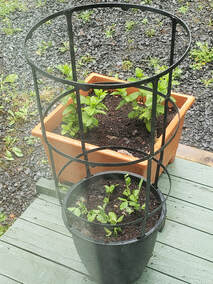
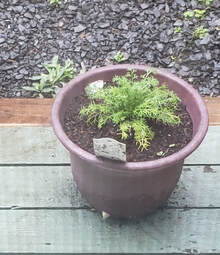
A certain woman went out and made a fragrant garden on her front step, using rich soil and pots of divers sizes. She chose marjoram, basil, and oregano to make meals satisfying to the tongue. There was chamomile to soothe, and mint to refresh the spirit, and.... well, you get the idea.

Now raccoons came in the night to feast on grubs within the rich soil, and knew not the woman's ambition. And verily, with their tiny hands they scooped the tender transplants, roots and all, and scattered them upon the ground. They spilt the contents of the pots, smothering and trampling her cherished herbs until they were wilted and limp.

Now in the morning, the woman was sorely troubled and laid plans to undo this mischief. Truly, she would overcome the raccoons.

"Lay compost upon the ground," one urged her. "Cast down vegetable and leaf; sprinkle bone of chicken and of fish. Place it in a corner of the lot, as an offering delightful to them. They will eat, and trouble you not."

The woman had a vision of raccoons and bears gathering and feasting in that distant corner, then lifting up their eyes unto her front step, and skulking forward with salivating maws gaping wide. 

"Fence them out," urged another.

In a fresh vision, she saw the raccoons clambering over the fence, now turning their desires to the large vegetable garden below.

The woman remembered the lesson that her father had learned in bitterness and sorrow, when she had been but a child.

(This is a parable within a parable, which might not be possible for the form, but here it is anyway.)
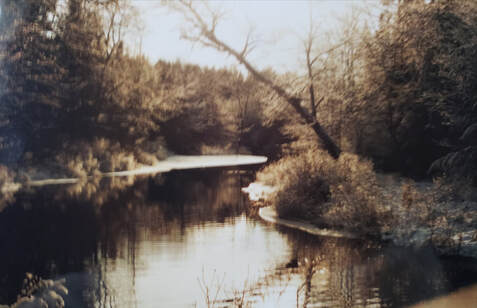
  • A farmer went down to the brook along the woodlot edge, and there at the narrows he built a bridge, that he might pass unto the other side. 
  • And he trimmed away the trees, the saplings, the poison ivy, and the brush, that his way might be clear. 
  • On the far side, however, he left two young maple trees to frame the way, to provide shade and artistry. And it pleased him well.
  • Now beavers came, and gazed upon the narrows, and saw that it was good. And they wove together a dam that filled the space beneath the bridge, and the waters rose.
  • In the morning, the man donned hip waders and pulled the dam stick by stick into his wagon, and he towed it away.
  • The beavers rebuilt, for beavers are determined and care not about pleasing farmers.
  • Verily the man smote the waters and tore out the bridge again,
  • And the next morning, a perfect dam lay packed beneath the bridge. 
  • But of the pleasing maples, there was no sign.
Thus it is shown that nature takes its own path, and does not take our resistance as law. For nature has missed the memo about humans being in charge.

So the woman repotted her chamomile, and she repotted her mint, and her oregano, and her basil, and her marjoram. And she accepted that, if the raccoons returned, her meals might be less tasty, but she would not starve.

And verily, her garden flourished.

​Here endeth the lesson.

Picture
2 Comments
Read More
Mary Keane link
6/20/2023 01:16:16 pm

I absolutely love this. The irony is delicious, as would be the herbs the gardener planted. I laughed out loud at the beavers not reading the memo in the parable within a parable. The language is so biblical with your addition of that wry, gentle turn of phrase that continues to make me smile. I think Our Lord Himself would be amused and gratified that you are emulating his often gentle parables.
The moral of your parable is so well noted. The co-existence of humans and nature, and the necessary understanding of the former for the latter. Humans need to eat and beavers need a home and to eat. Humans will always plant; beavers will always build their homes and search for grubs. We all need to live in harmony You see how you have got me thinking and enjoying a simple, well told parable with not a little dry humour and a lack of preachiness -- a simplicity of which Our Lord would approve. Thanks, my friend.

Reply
Anne Michelle
7/5/2023 11:31:24 am

My dear Mary,

I am delighted to read your response.

Verily, few have read, and I had despaired that ever a comment would be entered. On this day, however, I have wandered upon my website management page, and your words in patience awaited me.

Yes, nature offers lessons and opportunities for reflection. Like you, I do feel that our Lord does like a little gentle humour, and the parable form is a lovely way to convey a lesson.

As a background note, that really happened at my father's bridge, and the raccoons did lay waste to my herbs. However, the herbs are now flourishing, and the raccoons have found other gardens, it seems,

Reply

Your comment will be posted after it is approved.


Leave a Reply.

Powered by Create your own unique website with customizable templates.